
Coping With Seasonal Depression: Practical Ways to Protect Your Well‑Being
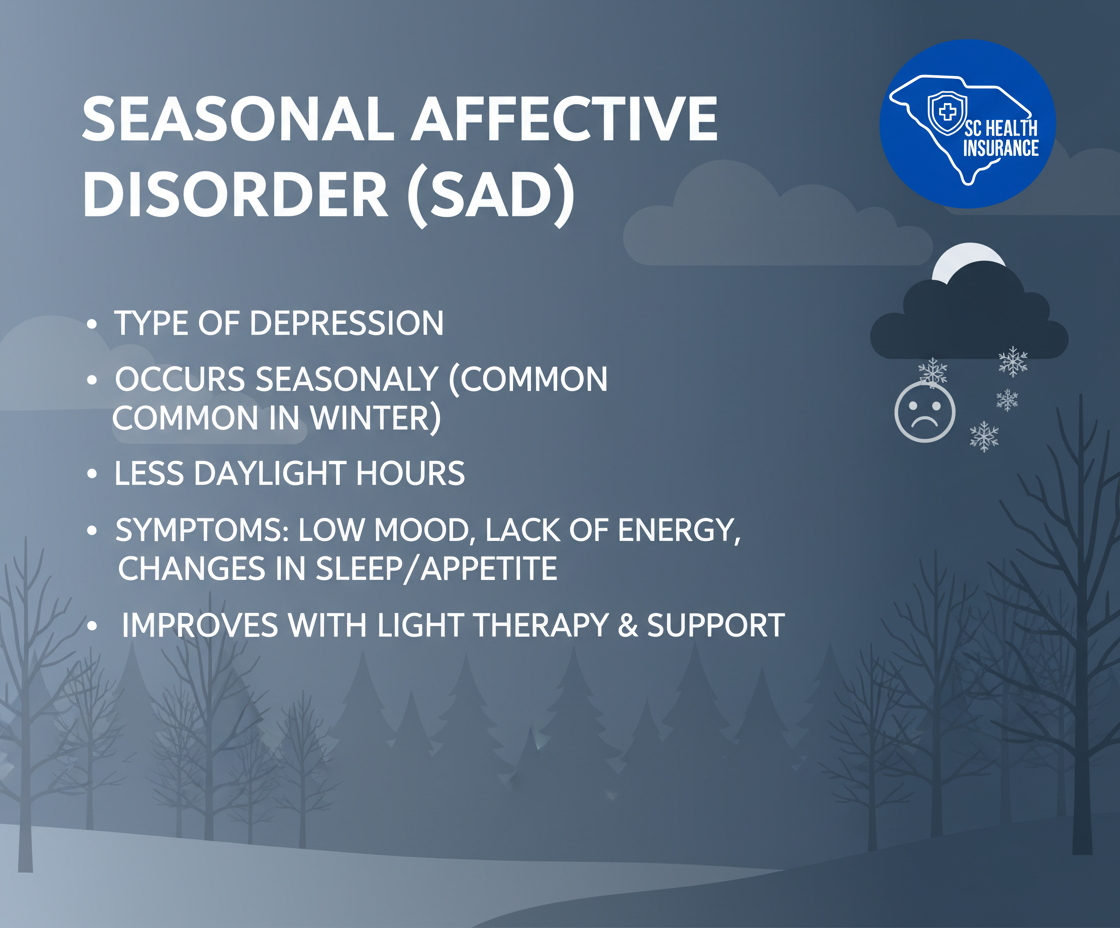
As the winter months settle in, many people experience a shift in mood that goes beyond the typical “winter blues.” Seasonal depression—also known as Seasonal Affective Disorder (SAD)—can affect energy levels, sleep, motivation, and overall well‑being. The good news: there are effective ways to manage symptoms and support your mental health during this time of year.
Recognize the Signs
Seasonal depression often shows up as low energy, increased sadness, oversleeping, social withdrawal, or changes in appetite. If these symptoms persist for two weeks or more, it may be time to explore additional support.
Increase Your Exposure to Light
Light plays a major role in regulating mood. Spending time outside during daylight hours can help—even a short walk makes a difference. Many people also benefit from light therapy boxes, which mimic natural sunlight.
Stay Active and Keep a Routine
Movement naturally boosts serotonin and endorphins. Whether it’s stretching, walking, or a short workout video, staying active can brighten your mood. Maintaining a consistent sleep and activity schedule can also help stabilize energy levels.
Stay Connected
Social interactions—whether in person, online, or by phone—can reduce feelings of isolation. Reaching out to friends, joining community groups, or engaging in hobbies can create meaningful support during darker months.
Seek Professional Support When Needed
If seasonal depression begins to interfere with daily activities, speaking with a mental health professional can provide clarity and relief. Therapists can offer personalized strategies and support tailored to your needs.
Give Yourself Grace
Seasonal depression is a real and common experience. Small steps, gentle habits, and supportive connections can make a significant difference. Remember—you don’t have to navigate it alone.